Data in Everyday Life
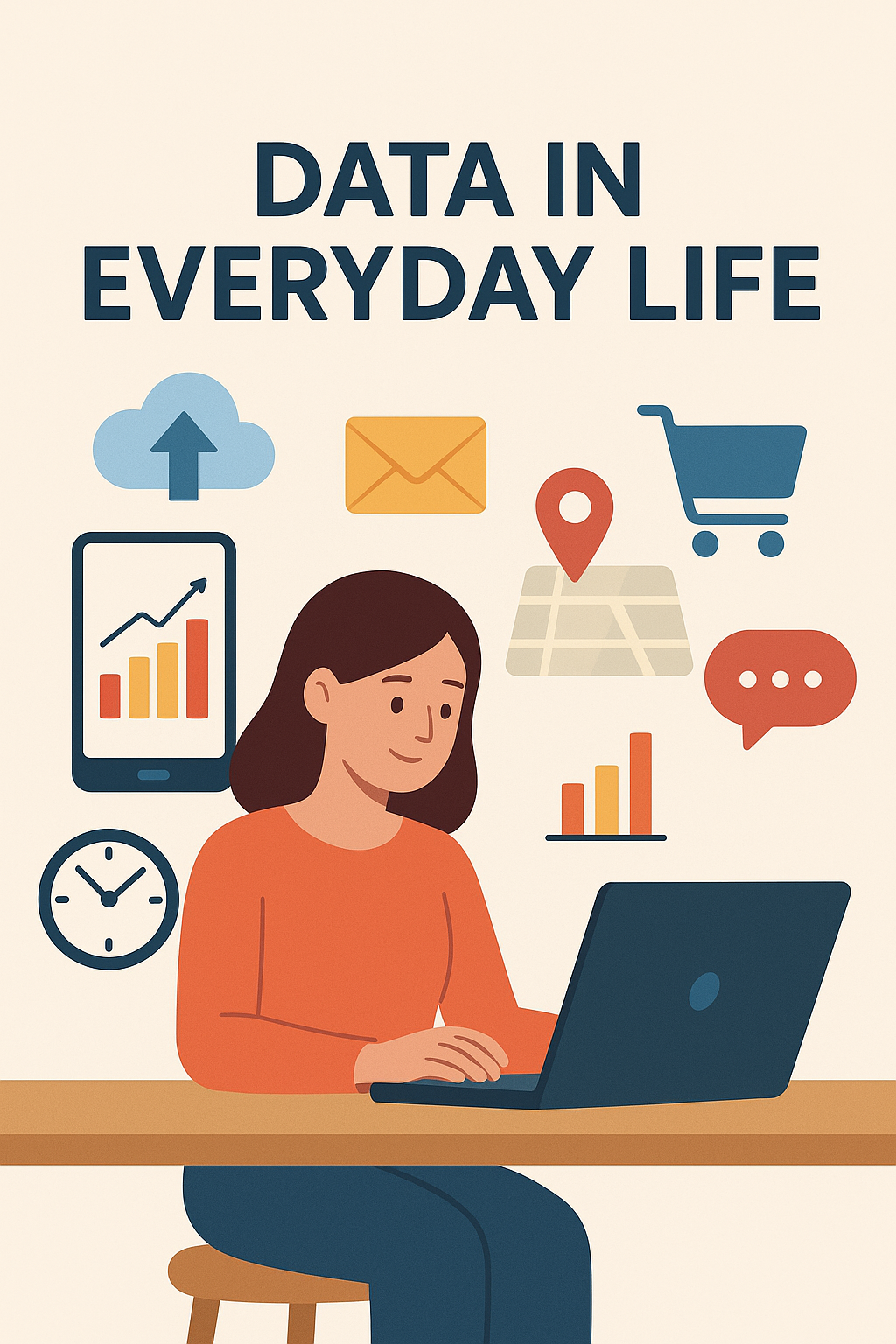
Data is not as complex or foreign as many people think. It is not something used only by scientists, banks, or tech companies. Data is part of everyday life — from how we budget money, choose food, and even how we use social media. Whether we realize it or not, we all use data every day to make decisions.
What Is Data?
Data simply means information. It can be numbers, words, observations, measurements, or facts collected for a purpose.
When you check the price of rice in three markets before buying – that’s data comparison.
When you monitor your fuel usage weekly – that’s data tracking.
When you check reviews before ordering from Jumia – that’s data analysis.
Data is anything that helps you make smarter decisions.
Examples of Data in Daily Life
1. Personal Finance
Many Nigerians track expenses to avoid overspending. You may write down daily spending like transport, food, and airtime. After a week, you look at the list and realise most of your money goes to data subscription. That conclusion came from data.
Data at work:
Budgeting
Expense tracking
Savings plans
2. Health and Fitness
When doctors check your blood pressure, temperature, or weight during a hospital visit, they compare the numbers to a healthy range before giving advice. That is data-driven decision-making.
Even fitness apps count your steps, calories, and heart rate. All of that is data.
3. Transportation
If you use Google Maps or Bolt, you’ve seen estimated time and fastest route suggestions. These apps collect data from thousands of drivers and traffic updates to give real-time results. That is data solving a real-life problem.
4. Social Media
Social media is powered by data. Instagram shows posts similar to what you already like. TikTok learns from how long you watch certain videos. YouTube recommends videos based on your watch history.
All these platforms use your activity data to personalise your experience.
5. Business and Markets
Data is everywhere in business. A small business owner in Lagos selling wigs may check which styles sell most. If she notices that “fringe wigs” sell faster than “closure wigs,” she will order more fringe wigs next month. That is data-driven business growth.
Why Data Matters
Data helps us:
✅ Make informed decisions
✅ Save money and reduce waste
✅ Understand patterns and behaviors
✅ Improve planning and problem solving
✅ Predict future outcomes
Whether in education, business, health, or technology, data improves results.
Data is not just for data analysts, tech bros, or big companies. Anyone can use data to make better choices in life. The more we understand data, the more power we have to solve everyday problems. Learning data skills like Excel, Power BI or SQL simply takes what we already use in daily life—and makes it smarter.
Data is not the future — data is already here.
Written by Damilola Tech Writes
Aspiring data analyst exploring the world of data—one insight at a time. I write about data analytics, technology, and career growth to inspire beginners like me on this journey.
About the author
On a journey into data analytics | Sharing projects, lessons & progress | Building consistency in tech
Comments
Join the discussionNo comments yet. Be the first to comment.